


Time is on our side! We are moving from the era of promise to that of proof. From appearance to being, to the very “raison d’être”… And from the age of “saying” to the age of “doing”. Each and every one of us is aware of this necessity, driven by public opinion, but the transition from vision to execution is not yet a reality for all of us.
With the crossed eyes of Charles Kloboukoff (President of Léa Nature), Cécile Ribour (Director of Communications, MAIF) and Antoine Arnault (Director of Communications, LVMH)
A new future for companies?
The health crisis linked to Covid-19 has highlighted the need for action that is imposed on companies and their managers. To act? Yes, for the «common good». Admittedly, for most of them, company leaders did not wait to be put to the test by public opinion in order to demonstrate a certain personal and professional ethics. Whoo!
But now the situation is different, new. Because it results from a conjugation of factors :
- of one Environmental awareness (all the more urgent because she realizes her own lack of preparation) on the part of the consumer-citizen;
- of one growing distrust of our institutions to address this issue as well as its social counterpart (yellow vest crisis…) ;
- of one Historical health crisis, A cruelly revealing revelation of the obsolescence of a system that had pushed its ideology to the extreme.
The current situation calls for a break. With the past, with the old models, the old «recipes». In this sense, this situation calls for a structural change of an extent and a severity close to those experienced by these very same companies not so long ago, with digital transformation…
The action necessary for transformation
A violent change? Yes.
- Because the expected change involves a little more than writing a «reason for being», As a means of communication, as the digital transformation was deeper than a simple technological equipment;
- Because the expected change involves authenticity combined with rapid implementation expected by your customers at the turn of the year; as digital transformation will have put an end to the fine words and other promoters of gadgets of all kinds;
- Because the expected change does not only engage you, as leaders, in your positive impact on society (if the topic of negative externalities had already been settled…). No, it also engages you (especially?) the trust that the consumer places in you. A trust that could be described as «last resort»; one that is now placed more in the hands of private power than in the public authorities. A trust of last resort to «rectify the situation». And I know of few business leaders inclined to disappoint their customers’ trust… Especially in these times.
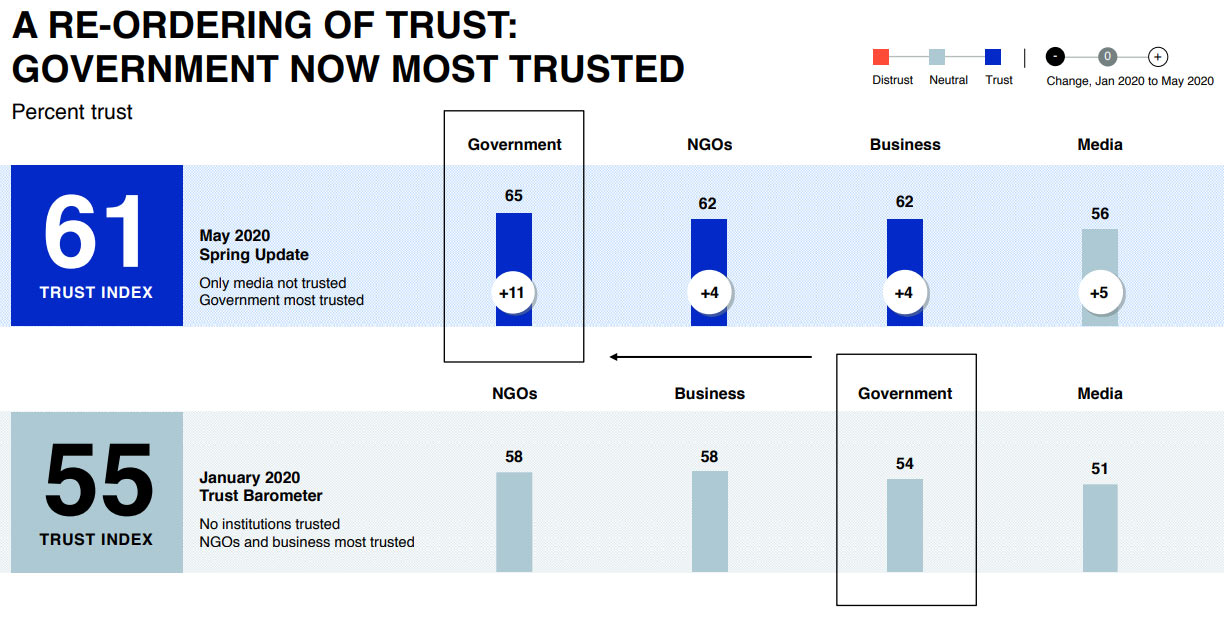
In January 2020, the renowned Trust Barometer Edelman described the company as an «institution» to which the population (on a global average!) placed the greatest trust.« doing what is right », ahead of the government (+4 points) and at the same level as NGOs.
Need confidence?
talenco offers a conference to review the state of trust and its main mechanisms and current levers. Contact Marie to learn more!
01 82 88 50 00
The commitment to serve trust
Thus, according to a recent study by the department Consumer Insights According to Médiamétrie and revealed at the Stratégies Summit 2020, «86% of French people see companies as «socially responsible'." open-ended ankles », who have adapted their productions to the context, and 70% of them recognize in them values that are dear to them.»
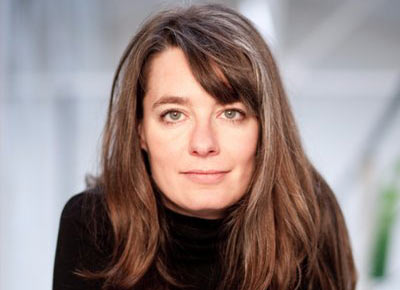
Cécile Ribour (© DR)
A trend that is confirmed Cécile Ribour, Director of Communications at MAIF : « Customers are paying more and more attention to what they buy. Betting that they will prefer the products and services of a company that resembles them and is committed to having a positive impact on society is not unrealistic. This also generates greater long-term loyalty. ».
CSR This is encouraging: it is institutionalizing. Unlike the «raison d’être,» it is no longer just a communication tool but a lever of transformation. corporate, Since it is associated with specific quantitative objectives.
Regarding this «raison d’être», according to one Report from MEDEF (conducted with EY and Deloitte) on the DPEF (Declaration of Extra-Financial Performance), 35% of the companies examined refer to it in their official communications or publications regarding extra-financial performance. However, only 9% of the companies went through the process, incorporating it into their charters.
There is therefore Four times more companies communicate their raison d’être than companies that have actually structured it!
Moving from storytelling to «storydoing»
This disproportionate report reminds us that The transition from vision to execution is not yet aligned with consumer expectations. That this study by the IFOP (reprinted by the Ministry of the Economy) confirms: 51 % French people consider that a company must be useful to society as a whole, 34 % for its customers, 12 % for its employees and 3 % for its shareholders.
However, when companies truly commit themselves and prove it, their social utility crystallizes the bond of trust, a true brand capital:
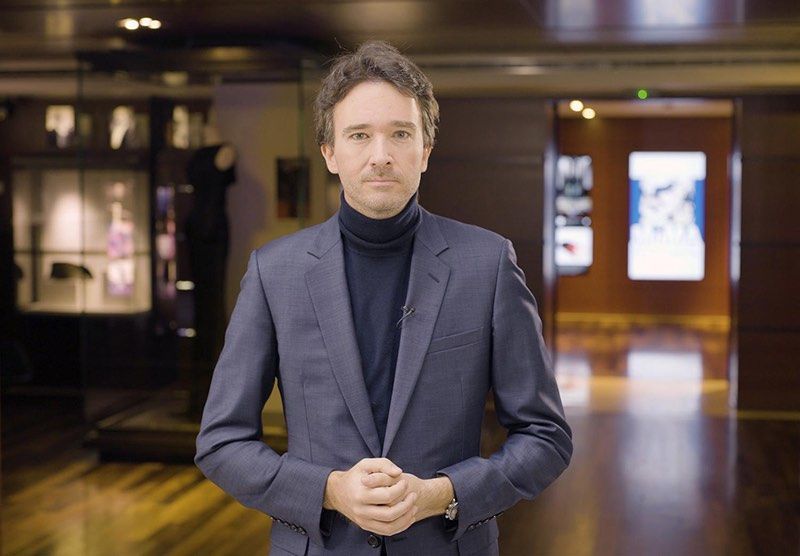
Antoine Arnault, Director of Communications at LVMH (© DR)
« When there are crises, tragedies, like the fire at Notre Dame Cathedral, our group is used to acting… We did all the hydroalcoholic gel we could (400 tons), we delivered to dozens of hospitals. Our bottles have become cult items: dozens of nurses and doctors took selfies with our gel to thank us. »
A factor of trust that companies historically committed to the environment have managed to make their pillar, To the point of keeping an edge in this regard over those who are still at the proclamation of a «reason for being,» which is all too often perceived as somewhat «artificial.».
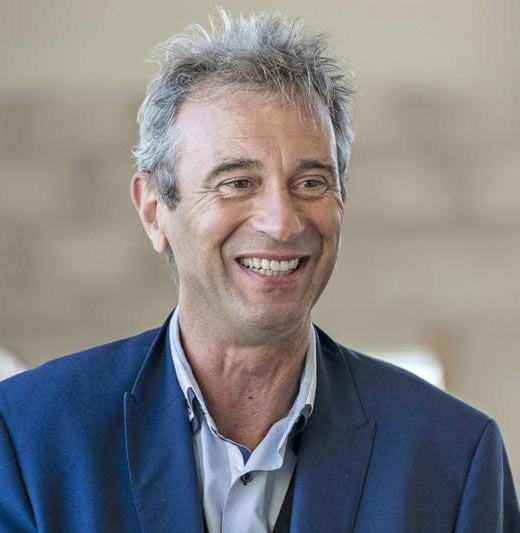
Charles Kloboukoff, Founder President of Léa Nature (© O. Blanchet)
« Like those of us who took our cue from the pioneers of organic agriculture 25 years ago, we now see multinational companies taking inspiration from our actions. This is in the right direction. After all, consumers are not giving them a choice. Having a policy CSR is not an option; it must be at the heart of the strategy of a company that wants to succeed, even if that means sacrificing short-term ROI. It is up to us to go even further to continue to set the example and stay ahead of the curve. »
So act… Because the future can only be envisaged through action. Just like commitment. A rather common temperament among business leaders. Is this sign that the hope that civil society places in them is also a proof of common sense?
Sources:
lejournaleconomique.com: «How brands stand out in a post-COVID world»
yoummater.world: « DPEF and raison d’être: where are the major French companies? »
LSA: «What they expect and hope for in the future»
MEDEF: DPEF report