
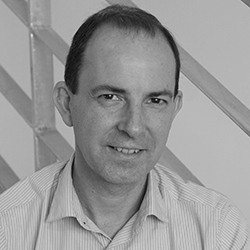
As part of a series of interviews with decision-makers about the strategic priorities of companies and their transformation challenges in a context of uncertainty, Vincent Gillet, Deputy General Secretary of the AFNOR Group, gives testimony ongoing transformations in organization and the impacts of digital and artificial intelligence.
The French Association of Standardization AFNOR and its subsidiaries constitute an international group dedicated to the public interest and sustainable development With 37 locations worldwide and 68,000 clients supported by a network of 3,000 auditors and evaluators and more than 1,000 employees. Its 4 areas of expertise They cover standardization, information, certification and training.

How do you identify and assess the major challenges that AFNOR must face in an uncertain context?
V.G. These are fairly conventional means:
- The first one is probably Listening to customers and understanding their changing needs who guide us a lot on the issues;
- Of course, everything that is General news and especially in matters of technological evolution, Because they are extremely important elements;
- Finally, it is the fact of being fully integrated into our ecosystem : everything related to the connection with the sectoral organizations, competitive intelligence, participation in a number of bodies, etc. helps us to better identify the issues that will apply more directly to our profession.
Among these issues, which ones would you have identified using this ecosystem and which have you decided to prioritize?
V.G. The main issues today are:
- First of all technological developments that are quite significant They have an impact both on the value creation chain vis-à-vis our customers, on innovation initiatives, and possibly on disruptive changes. business model which can be quite significant in certain activities and also have a very direct impact on the development of skills;
- we are engaged in an activity that relies primarily on the provision of intellectual services, therefore The skills of employees are key And it is a real challenge to try to maintain this balance between the levels of expertise and skills we have and the evolution of technologies that are accumulating in addition to an evolution of customer needs.
We intervene on many topics: quality, the environment CSR, carbon emissions, water conservation...
The evolution of skills is key both in terms of the evolution of customer needs and demands and to keep up with technological developments.
In your opinion, what are the most urgent and priority issues to be addressed or that have the most impact on the evolution of your profession?
V.G. Today, it is essentially these new technologies, artificial intelligence…
It is the digital transformation in general that is having a strong impact on us. We are having an impact on both business processes and back-office processes, as well as on how we create value for customers…
But we can see that we also have one impact on everything related to customers, Business activities, marketing and the way we can interact with our customers, who are directly affected by these technological developments.
So I think that the Digital transformation This is the issue I put far and foremost and which, of course, encompasses everything that has been seen in recent months regarding artificial intelligence.
In the face of uncertainty, do you prioritize innovation and transformation of your business? business model or a return to the fundamentals of services?
V.G. I want to say it’s both at the same time, that is, we need staying true to the fundamental principles of the profession which constitute an important part of our raison d’être, the value we bring to our customers…
At the same time, the way to implement these professions, the way to bring this value creation to the customers, we are forced to do it. to evolve with increasingly rapid approaches of innovation and transformation.
We have all experienced important events during the periods of confinement linked to the Covid-19 epidemic, which led us, especially in service activities, to make fairly rapid shifts in movements that had already been underway for years.
There, in a few months, we undoubtedly gained years of learning and advancement in our skills!
At AFNOR, we had an additional crisis that came to be added in 2021: a large-scale cyberattack, This has also led us to undertake a double learning process: on the one hand, to further integrate more digital technology (paradoxically in relation to this cyberattack), but also to strengthen our systems.
We also had to learn to work in degraded mode to ensure that we always had control over our activities, while at the same time having an information system that was practically on the ground.
Our transformation was significantly accelerated by this double crisis – confinement and cyberattack – which allowed us to progress very quickly.
Today, we took a rate of evolution which is out of all proportion to what we could have known before 2020 regarding all these topics, driven by an external context that is becoming increasingly rapid.
Has this forced digitalization helped you develop more agility and the ability to adapt quickly?
V.G. I think it has indeed helped us to develop much more agility and responsiveness.
Of course, there were many things that were being implemented. We had thought through business continuity plans and many other things, but putting them into practice actually allows for significant and rapid progress.
It’s about moving from theory to practice!
Could you give an example of a current transformation that would disrupt the structure, organization, or mindset of the teams?
V.G. There is a subject that I have already mentioned, and that is Artificial intelligence.
We are integrating some artificial intelligence into various activities. It’s a bit of a trend nowadays; all companies say that they’re integrating artificial intelligence; that’s quite natural.
Whether it’s our training, editing, evaluation, audit, or development of reference frameworks activities, we can clearly see the full power that artificial intelligence can bring.
Artificial intelligence can have an impact on all of our business activities with our customers, as well as on internal processes.
Indeed, we have a real copyright and data security problem. We don’t want to use these technologies in any haphazard way, in any context. There must therefore be a managerial involvement, This is part of one of the axes of our strategic roadmap.
Today we are supporting it in various ways, both in terms of training and internal experimentation that is secure and with managerial involvement across all the group’s entities (whether customer-oriented or back-office).
How do these major transformations at AFNOR – particularly artificial intelligence – impact the management line?
V.G. The fact that AI is one of the axes of the group’s strategy is already an important component. It also requires some AI training, Understanding what artificial intelligence is, To understand what it can be used for, to understand what the mechanisms behind it are, just to reassure and encourage all the teams to be able to offer themselves secure testing grounds.
The goal is rather to reassure and to accompany, First of all, we must not be afraid; we know that in addition to this, the introduction of this type of technology can be frightening and can create insecurity among certain teams.
So The management team is key. Today we have trained more than fifty managers in artificial intelligence: to understand where it comes from, how it works, what are the Profits Possible and some case studies on usages in professions closely related to ours.
Teams will probably use AI… but the subject is still a bit shaky! How can we successfully project managers into their future role?
V.G. It is obvious that we are dealing with a subject that is constantly changing. Moreover, what we developed in training two or three months ago will probably no longer be valid or will have evolved in a few weeks. So we need to ask ourselves the question: Maintaining up-to-date skills and knowledge on the subject.
I think that in the face of this movement around artificial intelligence, everyone wants to connect, to try it out, to see how it works, etc.
It is rather in our interest to encourage and frame the experimentation, to make POCs (proof of concept), rather than trying to limit it to a too small number of people. This would risk encouraging use in an uncontrolled environment with the risk of losing data and exposing oneself to much greater risks.
That is why this initiative around artificial intelligence is being followed and communicated to everyone.
We have opened secure platforms so that we can test and experiment without exposing ourselves too much to the outside world. We have put in place some dedicated resources and a code of good practice What can be done, what is better to avoid doing, what can be done in a rather secure, internal environment, with market-based tools but for which we have had a very specific framework…
We have also put in place cross-team teams with fairly clear management of the projects, which bring together Skills of different professions, Various components of the group are currently considering POCs or trying to accelerate collective projects that have already been initiated over the past few years. sharing their skills.
More generally, how do you manage to move from strategic vision to more operational execution within the organization?
V.G. It’s not that easy! It’s a real challenge to move from vision to execution that is aligned. I’m not sure there’s a magic recipe, but already, we need to try Communicate clearly about what we want to do, where we want to go in a targeted way. There is no question of necessarily communicating an overall strategy, but at least of being focused.
We have tried to define a number of projects within the framework of our strategic roadmap, with one quarterly schedule, That is, we prefer to move forward with small, quick steps, but to be able to achieve concrete results that can be capitalized and then resumed with new actions.
Vincent Gillet
So our logic is rather to have project managers on construction sites with a clearly designated pilot, a cross-functional team, and quarterly milestones This allows us to move forward quickly, and above all, it provides for follow-up at the executive committee level, which allows us to correct any deviations from the target if necessary, or to change the target if we realize that we were on the wrong track from the outset.

Are these quarterly cycles for deploying your strategy inspired by the OKR method (Objectives & Key Results) ?
V.G. They’re not exactly OKRs, but... Some of our entities have been acculturated to the OKR method, With talenco that said, we do take a bit of inspiration from this methodology, telling ourselves that we need to set ourselves goals and move forward at a much more sustained pace, and we realize that we achieve better results by working this way.
We tried strategic exercises where we were pretty sure of multi-year planning… in fact, we have a hard time moving forward!
The quarterly rhythm so it seems to us to be quite appropriate, it allows carrying out substantive actions – but not to be completely asleep by these multi-year fundamental actions – and having deliverables results for the quarter. This allows us to provide signals of progress and advancement in the process, which are much more impactful for all our teams.
In the face of all these changes, have you put in place a specific strategy for supporting your teams?
V.G. The communication that is made on our strategic roadmap It already shows that there is a direction, that the issues are being taken into account, and that solutions are being considered.
I think that training managers is key to supporting teams. Moreover, we have many activities manager training courses Quite regular on various topics.
We have introduced challenges with an «incentive» to try to motivate the teams, to encourage them to get involved in a number of actions.
The idea is to reassure. Project planning and then the training of the management team play an important role., Just as the executive committee provides visibility regarding the direction we are taking, the major projects we are working on, and the objectives we are pursuing.
All of this rests on a lot of internal communication vis-à-vis of everyone!
How do you ensure that teams are well aligned with strategic priorities?
V.G. Provide a reassuring framework, communicate regularly, and rely on the management team It allows you to ensure the involvement of the teams. But it is also very important to give the teams the freedom to experiment, to conduct pilots and POCs (proof of concept).
We also promote the fact that’accepting failure in a collective learning logic ; It is important for us to learn. We are dealing with new topics where the experience gained is not necessarily significant.
So, we need to test, learn and then accept that from time to time, it doesn't work and Drawing on their failures to understand the best thing we can do.
Of course, all of this relies on a progression in skills. Whether it be in technology or in the subject areas of expertise on which we are called upon to intervene for our clients, Upward mobility in skills is key at all levels, especially in a service company.
That is why we are devoting significant resources to these issues of upskilling and learning.
Have you put in place a specific or innovative mechanism to support the development of the teams' skills?
V.G. We tested specific programs related to expert families. For example, we say, «We have so many experts on the environmental theme, so we need to help them develop expertise in carbon issues, water-saving issues, energy efficiency issues, etc.».
We are trying to do some the most precise thematic observations possible in order to propose development plans for all our experts, both internal and external.
Generally, expert training courses are offered in response to requests made. Now we are trying to be more proactive on programs that allow us to anticipate, to budget better.
We have put in place a system for detecting weak signals, Thanks in particular to our internal networks and the ecosystems in which we operate.
We have some Thematic watch communities which is currently being experimented on in two particular expert groups, and we are trying to have both signal detection and‘anticipate all the needs to plan these upskilling initiatives’ over several years.
In your opinion, what would be the keys to successful transformation in service companies?
V.G. I think it is necessary Be clear about where you want to go and explain why We cannot remain in the situation we are in.
It’s both these aspects: making people want to change and also showing them the risks of not changing.
I think the involvement of everyone and the freedom to experiment and create pilots are key. We cannot transform ourselves if we do not give teams the opportunity to experiment and test., To do things a little differently.
And of course, The rise in competence is a key element of transformation !
In your opinion, what are the biggest challenges that lie ahead for our organizations?
V.G. I think that, by far, climate change, with all that it implies in terms of environmental transformation, transformation of business model, challenges, disruptions in the supply chains, is one of the main challenges.
Energy, water, carbon… the climate issues are already an emergency today, but I think it will be one of the major challenges for all organizations in the coming years.
In your opinion, where are the companies you support? What is their level of maturity in terms of the transformations mentioned?
V.G. We have a somewhat biased view, because the organizations we support are already committed and have put in place procedures by definition.
For companies that are well committed to the process, We are on a Quite high level of maturity, We are even impressed by many companies, including SMEs, that have a very surprising level of maturity in these transformation-related matters.
On the other hand, what can be regretted is that The level of deployment and adoption of these approaches remains low. and unfortunately very much driven by regulations and few voluntary efforts on the part of companies.
Interviews collected in May 2024 by Cyrille Chaudoit, Co-founder of talenco, in the perspective of our White paper on the levers for transforming companies in uncertainty. A big thank you to Vincent for his participation!
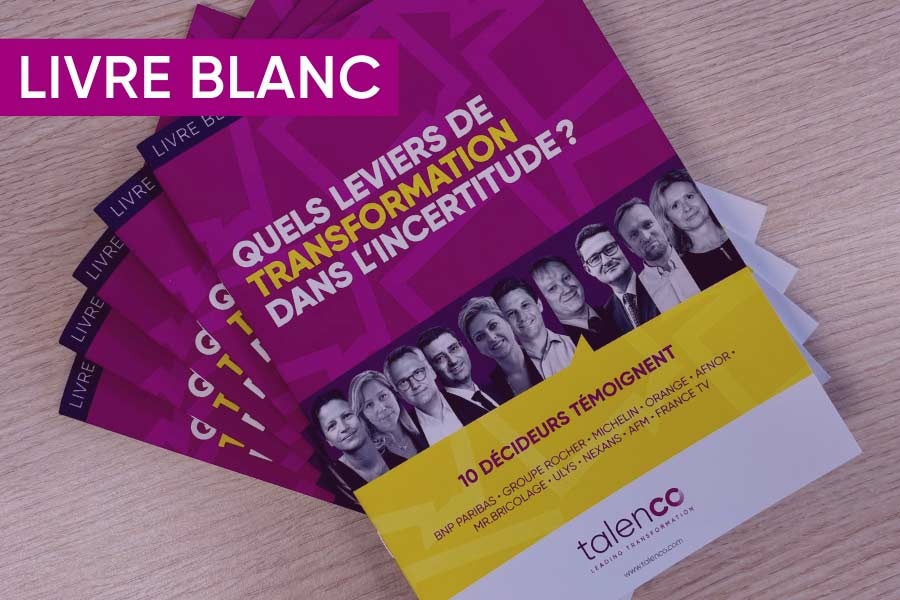
10 testimonies from leaders